Gentle, tail-wagging results.
Cosmetic dental cleaning for dogs and cats, without anesthesia, at your door.
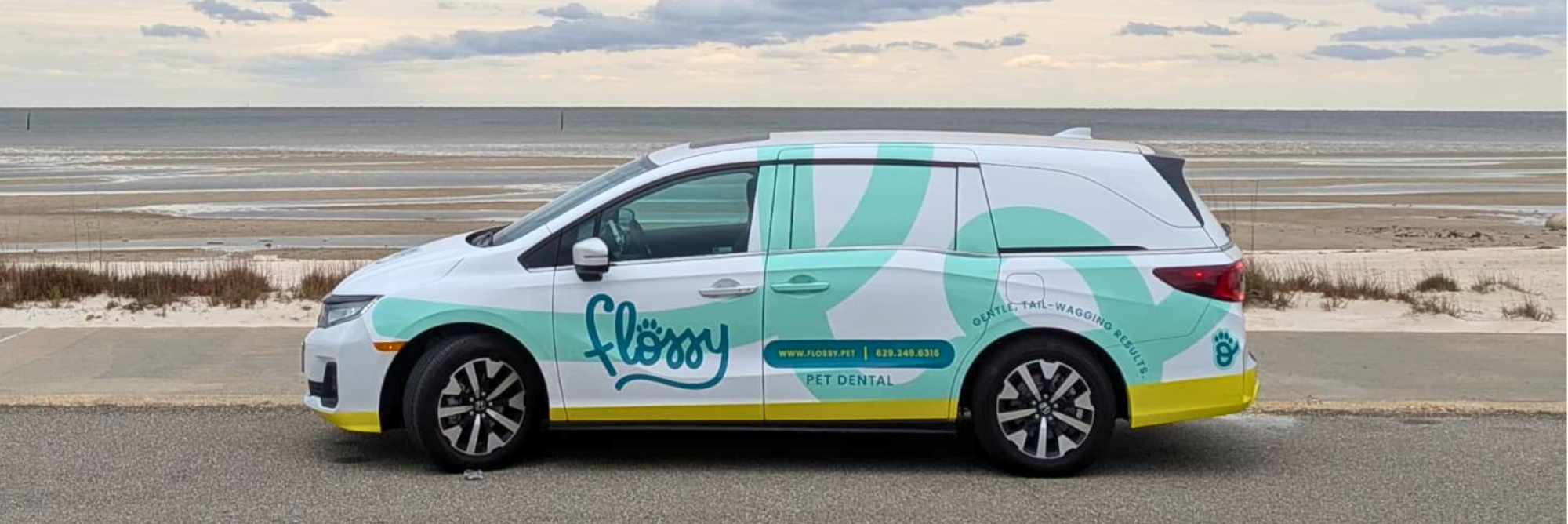
Flossy provides mobile, non-anesthetic dental cleaning for dogs and cats. We remove plaque and tartar above the gumline, where buildup typically starts, to keep it from accumulating. We polish teeth afterward and use non-prescription chlorhexidine as an antiseptic. Our team is skilled at gentle animal handling during dental care, and every team member is Fear Free Certified.
what we do
where our work ends
We clean above the gumline. Reaching below it requires general anesthesia and a veterinarian, so it falls outside what we do. We do not diagnose, treat, or perform medical procedures. We do not administer sedatives or prescribe medication, and we do not perform X-rays or pull teeth. If we notice anything outside what a cleaning covers, we will tell you and recommend you see your veterinarian. For more about what is and is not included, see our FAQs.
services offered
»Dental cleaning for dogs without anesthesia.
»Dental cleaning for cats without anesthesia.
pricing
$199 per pet
*Includes travel to your location, teeth cleaning that includes removal of plaque and tartar, and a polish.
No trip charge. No add-ons. No extra fees if you use a debit or credit card.
*Multiple pets welcome, cleaned one at a time, in one visit.
how it works
»Fill out our online form. Share details about your pets.
»We’ll contact you within 24 hours to coordinate a date. We offer services 7 days a week from 9AM to 5PM.
»We come to you. Your pet is cleaned in our mobile unit and handed straight back to you.
Total health includes oral care
Just like us, our loyal four-legged best friends can develop dental disease that affects overall health and comfort.
8 out of 10 dogs over 3 years old have gum disease
7 out of 10 cats over 3 years old have gum disease
Cats and dogs get gum disease more often than cavities. Left alone, it can cause tooth loss, pain, difficulty eating, and may contribute to problems affecting the kidney, liver, and heart.

Tartar is not our friend
Plaque that is not removed starts hardening into tartar within days. Once hardened, it cannot be brushed away. It clings to the tooth, gives bacteria a surface to grow on, opens gaps between teeth and gums, and builds up under the gumline where it does the real damage. Removing hardened tartar takes professional cleaning. Above the gumline, that's what we do. Below the gumline, it requires general anesthesia.
stages of gum disease

Gum disease develops the same way in humans and pets.
The later stages are irreversible, so don’t wait until there is bad breath, which typically starts at Stage 3.
staying ahead of tartar buildup
Brush your pet’s teeth daily. Three times a week is the minimum.
Have plaque and tartar removed above the gumline regularly.
Brushing thoroughly enough to remove all plaque is difficult with most pets, which is why regular removal matters. All pets are different. We suggest coming back every 3 to 6 months, depending on how your pet accumulates tartar.